STEAM Prototyping and Model Building Crafts in Pattaya
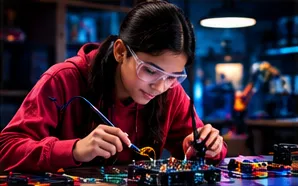
STEAM prototyping and model building crafts for Pattaya introduce safe maker materials—foam board, gears, LEDs and small motors—so children learn spatial design before or alongside coding.
1. From Raw HTML Strings to Jinja2
Returning multi-line HTML from Python views becomes hard to maintain. Flask uses the Jinja2 template engine so HTML lives in separate files and Python only prepares data and calls render_template.
2. Why Jinja2 Helps
Render external .html files instead of hardcoded strings
Pass dynamic variables from Python into templates
Reuse layouts with template inheritance
3. Jinja2 Syntax
{{ variable }} — expression / placeholder for values from Python
{% block content %} ... {% endblock %} — editable section in a layout
{% extends "base.html" %} — inherit a parent template
4. DRY Principle
Don't Repeat Yourself: put shared structure (headers, nav) in a base template once and extend it from child pages instead of copying HTML on every view.
5. Dynamic Data with render_template
from flask import Flask, render_template

app = Flask(__name__)

@app.route("/")
def home():
    return render_template("home.html", name="Abdullah")

if __name__ == "__main__":
    app.run(debug=True)
Visiting /about shows the base heading plus the about paragraph.
7. Stopping the Server
Press Ctrl + C in the terminal to stop the development server before restarting with new routes or templates.
Lesson Q&A
Long HTML strings inside views are hard to edit and scale. Jinja2 keeps HTML in template files, lets you pass variables with {{ }}, and supports inheritance so layouts stay consistent without duplication.
DRY means Don't Repeat Yourself. A parent template defines shared markup and empty {% block %} regions; a child uses {% extends "base.html" %} and fills those blocks so structure is written once and reused.
The view called render_template("home.html", name="Abdullah"). The template used
Welcome, {{ name }}
, so the browser rendered the heading with the value from Python.
What children can learn
Safe maker materials and simple tools
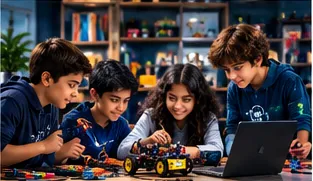
Miniature robots, bridges and automated prototypes
Disclosure: This page contains affiliate links. We may earn from qualifying purchases at no extra cost to you. Links are intended for parents and educators, not as marketing directed at young children.
Hands and Minds: Physical Models That Teach Engineering Intuition
Pattaya families seeking maker skills benefit from craft that trains spatial reasoning. Adult supervision required for tools and motors. Enquire WhatsApp +92 322 4217059. No invented Pattaya venue or kit prices.
Frequently asked questions
What maker craft tools and materials are utilized in the Pattaya STEAM workshop?
Students construct physical models using safe maker materials—including EVA foam chassis, thermocol structures, gear assemblies, LEDs, and small DC motors—to build functional mini-robots, bridges, and automated prototypes.
How does physical craftwork strengthen digital coding logic for kids in Pattaya?
Physical model building develops 3D spatial awareness and mechanical intuition. When combined with electronic sensors and code, students gain a complete end-to-end understanding of physical engineering and software logic.
How do parents in Pattaya sign up for an introductory maker craft session?
Reach out to our admissions mentor via WhatsApp to select an open weekend time slot and download our beginner STEAM project blueprint.