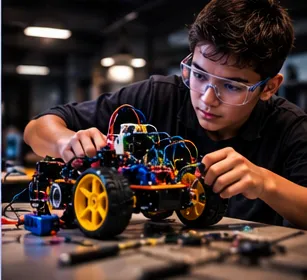
Debugging in the Physical World: Turning Hardware Failures into Learning Breakthroughs
Software bugs hide in logic. Hardware bugs hide in friction, polarity, weak batteries, and loose jumpers. Home robotics projects for children online succeed when mentors treat those failures as data.
The three-layer check
First, power: battery and polarity. Second, signal: does the program reach the motor or LED? Third, mechanics: jammed wheel or blocked wire? Children who learn this order waste less time rewriting perfect code for a disconnected motor.
Why home is a good classroom
Home projects force real constraints: limited space and pack-away routines. Online mentors can review serial output or a short video and suggest the next experiment. Expat families gain flexibility without a local lab every week.
Emotional skills and inventory
Frame bugs as hypotheses. Lay out parts before each project. Missing jumpers cause false “code is wrong” conclusions. Inventory is debugging step zero.
Safety and session hygiene
Unplug when modifying wiring. Mind small parts and pets. Position the camera so the mentor can see the board. Confirm kit recommendations when you enquire.
Practice that transfers
Progress is a child who can tell the story of a failure and the fix. Ask: What is measured? What is decided? What moves? Keep expectations honest: guided practice beats passive watching.