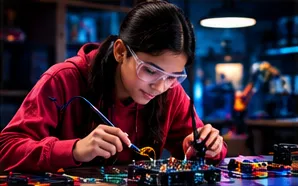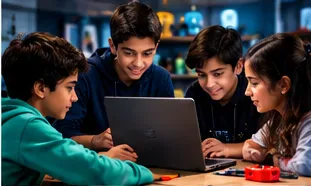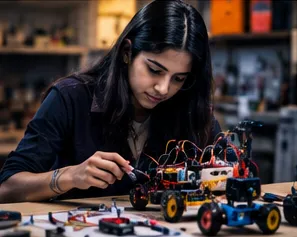
Hands-On Engineering at Home: Robotics and Circuit Logic for Kids in Askari 1
Parents in Askari 1 often look for technology activities that do more than fill screen time. Online robotics classes give children a practical way to understand how machines sense their surroundings and respond to instructions. The emphasis is on clear thinking, careful testing and safe habits—not on collecting impressive kit lists.
At the heart of beginner robotics is a simple chain: input, decision and output. A sensor provides input (distance, light or tilt). A program decides what that input means. A motor or indicator produces an output. When a child can explain that chain without copying a script, they are already practising engineering reasoning.
Learning sequence that builds confidence
Early sessions use browser-based simulators so students can change one instruction at a time and observe the result. That approach reduces fear of “breaking something” and keeps attention on logic. Families who later add low-voltage components do so under parent supervision, following the same rules they practised online.
Children learn to keep short notes: what they changed, what they expected and what happened. The habit turns every attempt into evidence. Debugging becomes a puzzle rather than a failure—an attitude that helps in school science and everyday problem solving.
Sensors, motors and control logic
Sensors convert physical quantities into values a program can read. Motors convert program values into movement. Between them sit thresholds, conditions and loops. Students discover that a robot does not invent behaviour; it follows rules the learner defined. That insight is more valuable than any single finished demo.
We discuss realistic limits. A beginner project might stop a simulated robot near a wall. A later project might blink an LED based on light level. Advanced ideas—full autonomous navigation or complex multi-sensor fusion—are presented as future goals, not as claims of what every first session delivers.
How families in Askari 1 can support learning
Consistent session times matter more than perfect equipment. Encourage children to explain their logic in plain language. Ask what they would change next. Avoid completing the project for them; the struggle is part of the skill. For schedule or setup questions, contact support@aiandroboticsclub.com or WhatsApp +92 322 4217059.
Online robotics in Askari 1 works best when curiosity is protected, safety guidelines are respected and progress is measured by understanding rather than by photos of hardware alone.
A sample learning walkthrough
Imagine a beginner task: keep a simulated robot from driving into a wall. The student places a distance sensor facing forward. The program reads the sensor many times per second. If the reading falls below a chosen threshold, the program sends a stop command to the motors. If the reading stays high, the motors continue forward. Changing the threshold teaches calibration. Changing the stop behaviour to a gentle reverse teaches alternative strategies.
Children document three numbers: the threshold they chose, the lowest distance observed and whether the stop worked. That small dataset turns play into measurement. Parents can ask for a one-minute explanation of the rule without looking at the screen—an excellent check of understanding.
Later challenges might add a second sensor, a timed loop or a simple state change (explore versus return). Each addition reuses the same input–decision–output pattern. The goal is transfer: when the child meets a new device, they still ask what it senses, what rule applies and what actuator should respond.