Safe Home Electronics: Hands-On Arduino Prototyping Labs in Askari 10
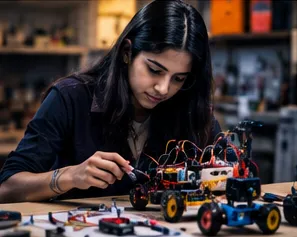
Arduino is an accessible microcontroller platform widely used for learning electronics and control. Classes for youth in Askari 10 introduce how software instructions can drive physical outputs—LEDs, buzzers, simple motors—within strict low-voltage safety limits.
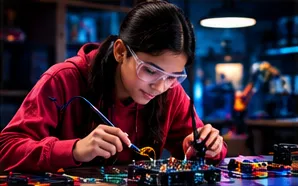
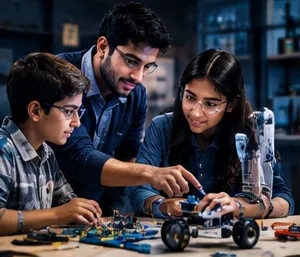
Students begin with electrical path basics and clear diagrams before writing control code. Simulation can precede any physical wiring. Parent supervision is required for hardware stages.
Representative mini-projects
Illustrative projects include automatic lighting based on a light reading, a distance-triggered buzzer and basic motor control. These examples show input–process–output clearly. Exact project lists depend on the module agreed with the family; we do not invent kit inventories on marketing pages.
Debugging spans both code and connections. A non-lighting LED might be a wrong pin number, a missing resistor understanding or a logic error. Systematic checks teach patience and method.
Transparency and next steps
We avoid unverifiable claims about certificates or guaranteed competition results. Skill is shown through working prototypes and explanations. For suitability and safety questions from Askari 10, contact support@aiandroboticsclub.com or +92 322 4217059.
Respecting electricity while exploring control
Arduino learning pairs respect for electronics with curiosity about control. Students map digital pins to outputs and analog readings to inputs. They discover that code runs in a tight loop, constantly checking and responding. Delays, thresholds and simple state variables create behaviours that feel responsive.
Project ambition scales with supervision quality. A blinking pattern is a valid first success. A distance-triggered alarm is a natural extension. Motor projects demand extra care with current and mechanical hazards. We prefer steady competence over risky spectacle.