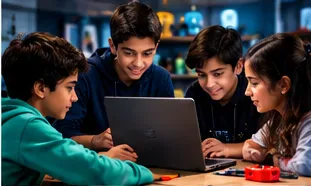
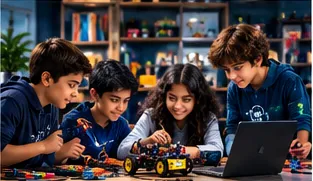
Online · Mont Kiara · KL

Online Coding and Robotics Classes for Kids in Mont Kiara, Kuala Lumpur

Online coding and robotics classes for kids in Mont Kiara, Kuala Lumpur help international-school families explore visual programming, circuits and AI logic through live English sessions—without inventing a private Mont Kiara campus.

Coding Mont Kiara

1. Introduction: Advanced Code Reusability via Inheritance

Throughout earlier modules, our primary focus has centered on writing modular code and maximizing reusability. In Object-Oriented Programming (OOP), the most advanced and central mechanism for code reusability is Inheritance.

The word inheritance translates conceptually to "heritage" or "legacy". In programming:

  • Once you design a well-structured class complete with its own data attributes and methods, you do not need to rewrite that logic from scratch when building new, related classes.
  • Instead, newer classes can directly inherit the data and behaviors of that existing class, creating a natural hierarchy between Parent (Base) classes and Child (Derived) classes.

2. The Real-World Analogy: The Animal Kingdom

Consider modeling the animal world in software:

  • Every animal shares fundamental characteristics and behaviors—such as the ability to speak/produce sounds, move around, eat, drink, and reproduce.
  • When creating classes for specific animals—such as a Lion, a Dog, or a Cat—each of these is essentially an animal.
  • Consequently, all specific animals should automatically possess standard default animal behaviors, while retaining their own unique actions.
  • It makes architectural sense to define general animal behaviors inside a common Animal parent class, and then allow specific animal classes to inherit from it.

3. Python Inheritance Syntax: Parent in Parentheses

To establish inheritance in Python, declare the child class using the class keyword, specify the child class name, and place the parent class name inside parentheses () directly after the child class name:

class ChildClassName(ParentClassName):

Passing the parent class inside parentheses instructs Python to automatically make all data attributes and methods from the parent class accessible within the child class.

4. Example 1: Basic Inheritance and the pass Keyword

In this first example, an Animal parent class defines a general speak() method that prints "some sound". The Dog child class inherits from Animal without defining any new methods of its own yet:

# 1. Defining the Parent (Base) Class
class Animal:
    def speak(self):
        print("some sound")

# 2. Defining the Child Class inheriting from Animal
class Dog(Animal):
    pass

Understanding the pass Keyword

  • When defining a class or function where you do not wish to add additional code or custom behaviors yet, Python requires a non-empty indented body.
  • The pass keyword acts as a syntactical placeholder. It executes no operation and causes no effect, allowing the template to compile cleanly while signaling that no further instructions are written yet.

Testing the Inherited Method in Jupyter Notebook

# Instantiating an object of the child class
dog1 = Dog()

# Calling the speak() method on the child object
dog1.speak()

Output:

some sound

How Python Evaluates This

  1. Notice that speak() was never defined inside the Dog class.
  2. Because Dog inherits from Animal, Python looks inside Dog and, upon finding no local speak() method, ascends the hierarchy to the parent Animal class.
  3. It finds and executes Animal.speak(), outputting "some sound".

5. Example 2: Extending the Child Class with Custom Behaviors

Child classes are rarely just empty duplicates; they inherit shared functionality while introducing their own specialized methods.

Here, we extend Dog by adding a child-specific bark() method:

# 1. Parent Class with general functionality
class Animal:
    def speak(self):
        print("some sound")

# 2. Child Class inheriting from Animal and defining unique behaviors
class Dog(Animal):
    def bark(self):
        print("woof")

Testing Both Inherited and Child-Specific Methods

# Creating an instance of the modified Dog child class
dog1 = Dog()

# 1. Calling the child's own specific method
dog1.bark()

# 2. Calling the inherited parent method
dog1.speak()

Output:

woof
some sound

Execution Walkthrough

  • The Dog class now possesses two distinct methods: its own specialized bark() method and the inherited speak() method from Animal.
  • Calling dog1.bark() executes the method defined inside Dog, printing "woof".
  • Calling dog1.speak() accesses the method inherited from Animal, printing "some sound".
  • This design eliminates redundant code while allowing subclasses to expand their capabilities cleanly.


Lesson Q&A

Inheritance is an Object-Oriented Programming mechanism where a new class (a Child class) inherits the data attributes and methods of an existing class (a Parent class). It represents an advanced form of code reusability because once you build and test a parent class (such as an Animal class containing common behaviors like movement, eating, and sound), you can create specialized child classes (such as Dog, Cat, or Lion) that automatically inherit those behaviors without rewriting identical code from scratch.

To inherit from a parent class, specify the parent class name inside parentheses () immediately following the child class name during definition:

class Dog(Animal):
    pass

By placing Animal inside parentheses, Python makes all functions and data defined in the Animal parent class immediately available to the Dog child class and any objects instantiated from it.

In Python, the pass keyword serves as a syntactical placeholder. When creating a child class that inherits all behaviors from a parent class without adding any immediate new methods or attributes, Python still requires a valid, indented code block. Inserting pass allows the class definition to execute without error while indicating that no further custom code is being written inside that block yet.

What children can learn

Enquire about online coding and robotics classes for kids mont kiara kuala lumpur

WhatsApp +92 322 421 7059

AI and Robotics Club | The 100 Mission AI & Robotics Hero Journey

100 Mission playlist · WhatsApp community · Saturday live 12–1 PM GMT

Recommended self-paced course for parents & educators

Coding for Kids on Udemy.

Disclosure: This page contains affiliate links. We may earn from qualifying purchases at no extra cost to you. Links are intended for parents and educators, not as marketing directed at young children.

Code Without the Commute: Project-Based STEM for Mont Kiara Families

Mont Kiara and Sri Hartamas sit among Kuala Lumpur’s densest international-school corridors. Parents searching for online coding and robotics classes often want structured STEM that fits after school without another drive across KL traffic. Our approach starts with visual programming so beginners see cause and effect immediately, then introduces circuit and text-code ideas when learners are ready.

A typical pathway may include Scratch-style games, simple sensor simulations, and later optional Arduino or Python mini-projects. Software simulators keep early electronics practice safe; any physical kits remain optional and under adult supervision. This page does not invent a Mont Kiara classroom address, fixed prices or guaranteed exam results. Malaysia-evening and weekend windows can be discussed on enquiry via WhatsApp +92 322 4217059.

Parents support progress best by asking children to explain one idea in their own words rather than finishing the project for them. Supervise online accounts. The free 100 Mission playlist and Saturday live support (12–1 PM GMT) extend practice without pressure. Naming Mont Kiara helps families find relevant online options; progress is measured by understanding and completed mini-projects, not marketing claims.

Frequently asked questions

What age group can enroll in online coding and robotics classes for kids in Mont Kiara, Kuala Lumpur?

Our live online sessions are designed for students aged 8 to 16 living in Mont Kiara, Sri Hartamas, and nearby international school hubs. Beginners start with visual drag-and-drop programming, while older learners progress into Arduino circuit wiring, Python script automation, and AI logic.

How do online classes accommodate international school schedules in Mont Kiara?

We offer flexible weekend and after-school time slots specifically planned around GIS (Garden International School) and MKIS term calendars. Consequently, students can balance academic homework with interactive, project-based STEM learning without commuting through KL traffic.

How do Mont Kiara parents book a free trial class for their child?

Booking is instant and simple. Click the WhatsApp button on this page to chat with our mentor team, reserve your preferred session time, and test out a live interactive coding demo with no commitment required.

Explore related learning

BangsarArduino · Bangsar AmpangRobotics Club · Ampang PJScratch · Petaling Jaya