Project-Based STEM Learning: Turning Screen Time into Engineering Logic in Askari 2
STEM workshops for children in Askari 2 turn abstract ideas into builds and tests. Science provides questions, technology provides tools, engineering provides design cycles and mathematics provides measurement and patterns. Project-based sessions keep those strands connected.
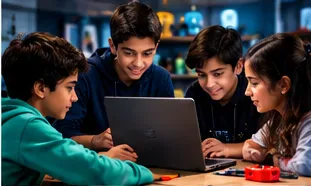
A typical challenge asks students to plan, build a simple model or simulation, test it, then improve one variable. The process matters more than a perfect first result. Children learn that iteration is normal professional practice, not a sign of failure.
From screen time to structured making
Passive consumption is replaced with active goals: make a sensor reading useful, make a structure more stable, make a program respond correctly. Instructors emphasise safe habits and clear documentation so parents can see the thinking behind each attempt.
Online delivery uses live guidance and practical tasks. Where physical components appear, they remain low-voltage and supervised. We do not invent local campus claims; community workshop requests can be discussed directly with the club.
Skills that transfer
Students practise decomposition (breaking a problem into parts), pattern spotting, abstraction and algorithmic steps. Those habits support school science and mathematics as well as future coding or design work.
Families in Askari 2 can reinforce learning by asking children to teach back one idea from the session. Short explanations reveal understanding better than screenshots alone. Contact +92 322 4217059 or support@aiandroboticsclub.com for upcoming options.
Engineering notebooks for young makers
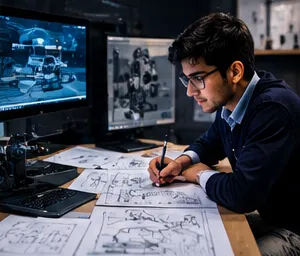
Even short online workshops benefit from a simple notebook: sketch, materials or tools, steps, test result, next improvement. Writing forces clarity. A child who can state “the tower fell because the base was narrow” has diagnosed a variable worth changing.
Mathematics appears naturally as counting trials, measuring lengths or comparing times. Science appears as hypotheses about why a design failed. Technology appears as the tools and programs used. Engineering is the cycle that binds them. Art and communication appear when students present their design story to parents or peers.
We keep claims modest. Not every workshop produces a competition robot. Many produce stronger habits: measure, change one thing, test again. Those habits outlast any single model.