Sensors, Motors, and Control Loops: Practical Hardware Automation in Askari 4
Combined coding and robotics classes help students in Askari 4 see software and hardware as one system. Code reads sensor values; decisions in code change motors or lights. The feedback is immediate and motivating when the logic is sound.
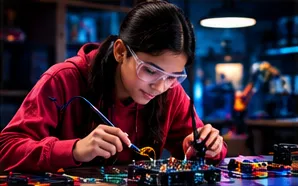
Beginners start with simulation so concepts come first. Physical components, when used, follow safety rules and parent oversight. Zero prior experience is assumed; fundamentals are taught explicitly.
Sensors, actuators and control
Ultrasonic or light sensors illustrate input. LEDs and motors illustrate output. Conditional statements connect the two. Students learn that reliable behaviour depends on clear thresholds and careful testing—not on guessing.
Remote learning uses browser tools and structured challenges. We avoid promising specific kit shipments on landing pages; equipment choices are discussed case by case.
Building independence
Learners document hypotheses and results. Parents support by protecting time for focused practice and by resisting the urge to finish the project for the child. Progress is shown through working logic and verbal explanations.
For technical setup or pathway questions from Askari 4, email support@aiandroboticsclub.com or message WhatsApp +92 322 4217059. Partner academic support such as pakhometutor.com can complement school subjects when families need broader tutoring.
Closing the loop between code and motion
When a simulated LED turns on because a light sensor crossed a threshold, students witness a closed loop. They adjust the threshold and watch behaviour change. That direct feedback is difficult to obtain from worksheets alone.
Instructors emphasise naming and comments in code even at beginner level. Future readers—including the student next week—need to understand intent. Safety talks cover unplugging power before changing wires, avoiding short circuits and never experimenting with mains electricity.
Families who enjoy the pathway can discuss optional hardware later. Until then, simulation keeps learning continuous and low-risk.